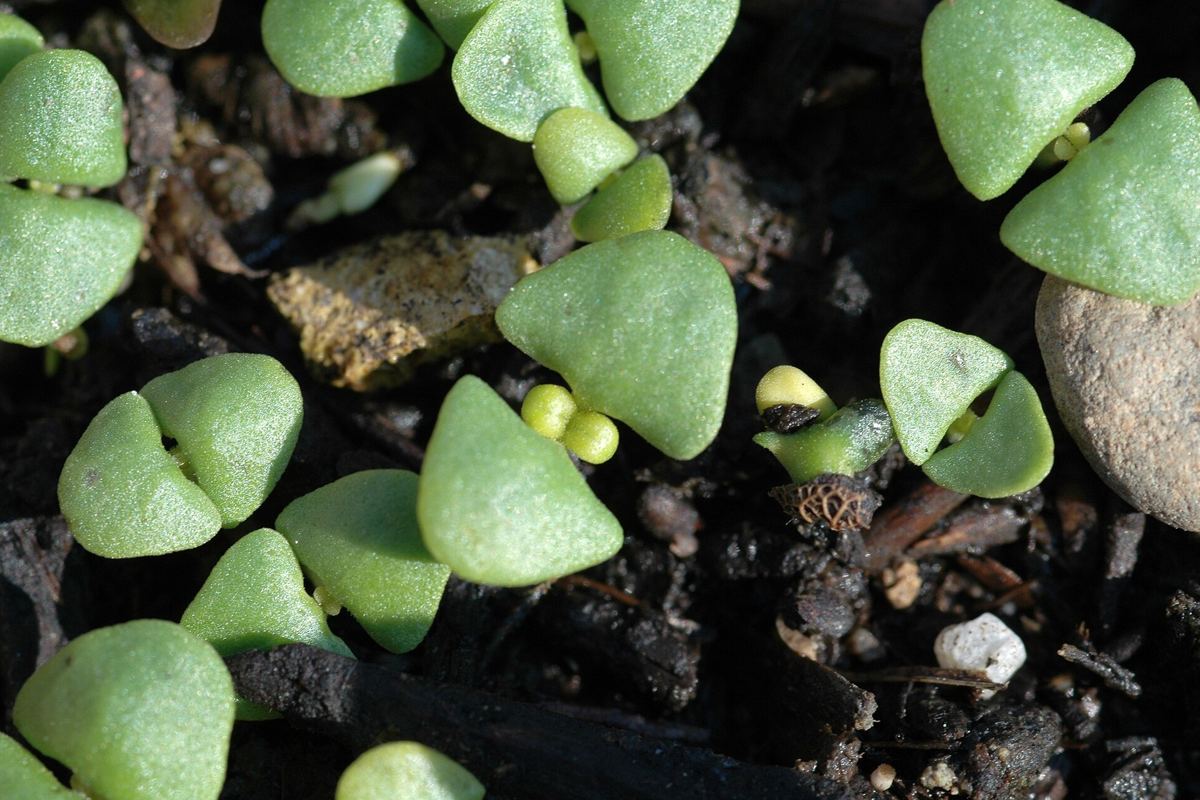
Photo: Amada44 (Wikimedia Commons user), Public domain. Image credits
A hypothesis is a testable prediction with a reason behind it. It is not a guess pulled from the air. It comes from your background research.
The pattern
If [I change this], then [this will happen to what I measure], because [scientific reason].
The if part names your independent variable. The then part names your dependent variable and the direction you expect it to go. The because part shows you did your research.
Weak vs. strong
| Weak | Why it's weak | Stronger |
|---|---|---|
| Plants like music. | Not measurable; no variables. | If bean plants are exposed to music for 3 hours a day, then they will grow taller in 3 weeks than plants kept in silence, because… (state what your research suggests). |
| Salt will affect ice. | Which direction? How measured? | If more salt is dissolved in water, then the water will freeze at a lower temperature, because dissolved particles interfere with ice crystals forming. |
| The best paper towel is Brand X. | Opinion; no reason. | If a paper towel has more layers, then it will absorb more water per sheet, because it has more fibers and air spaces to hold water. |
By grade
- K–2: A simple prediction is fine: “I think the ice in the sun will melt first because the sun is hot.”
- 3–5: Use If–then–because, and name what you will measure.
- 6–8: Make the direction clear and connect the reason to a science idea (energy, density, photosynthesis).
- 9–12: Where possible, predict a mathematical relationship (“period will be proportional to the square root of length”) so your data can test a model, not just a direction.
Common mistakes
- Testing two things at once. “If I use warm water and more sugar…” Pick one.
- Writing a question instead of a prediction. “Will salt change the freezing point?” is your question, not your hypothesis.
- Changing the hypothesis after the results come in. Don't. If you were wrong, say so and explain. That is good science.
Next guide: Independent, Dependent, and Controlled Variables